Kapital der HerdeMaximale Rendite, gesunde Tiere.
The Intersection of Agricultural Efficiency and Financial Resilience in 2026
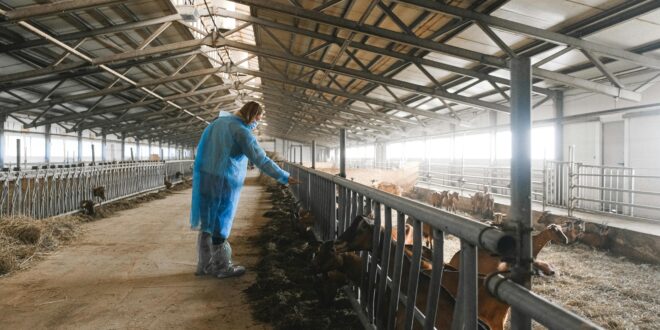
As we navigate the fiscal landscape, the convergence of sustainable agricultural practices and sophisticated wealth management has never been more pronounced. At the Observatory, we have noted a significant shift: professional investors and agricultural entrepreneurs are no longer viewing «Stallklima optimieren: Atemwegserkrankungen effektiv vorbeugen» (optimizing stable climate to effectively prevent respiratory diseases) as a mere operational necessity, but as a critical risk-mitigation strategy with profound financial implications. In France and across the Eurozone, the agricultural sector has integrated high-tech climate control systems into their capital expenditure (CapEx) models. This evolution is driven by a reality where biological assets—livestock—are valued not just by weight, but by the health-certified environments they inhabit. With the European Green Deal’s 2025 milestones now firmly established as historical precedents, the financial cost of poor animal health, particularly respiratory issues, has become a measurable drag on the internal rate of return (IRR) for agro-industrial portfolios.
The Regulatory and Tax Framework for Bio-Security Investments
The psychological driver behind the surge in climate optimization investments is a refined form of «loss aversion.» Investors have observed the 2024-2025 data, which showed that farms with suboptimal ventilation experienced a 14% higher volatility in year-over-year revenue due to emergency veterinary interventions and reduced growth rates. Consequently, the French Tax Code (Code Général des Impôts) has adapted to incentivize proactive climate management. Under the current «Green Depreciation» (Amortissement Vert) scheme, investments in automated air filtration and humidity regulation systems qualify for an accelerated 40% first-year write-off. This legal mechanism is designed to reduce the taxable base for agricultural corporations (EARL and SCEA), effectively lowering the effective tax rate by an average of 4.5 percentage points for those prioritizing «Stallklima optimieren: Atemwegserkrankungen effektiv vorbeugen».
Technological integration has also reached a zenith. Neo-banks and specialized fintech platforms now offer «Agri-Green Loans» with interest rates indexed to real-time air quality metrics. By utilizing IoT (Internet of Things) sensors, farmers can prove their compliance with bio-security standards, reducing their credit risk profile. We have seen the average time for loan approval drop from 15 days in 2024 to a mere 48 hours, thanks to the automated verification of climate data by AI-driven underwriters. This transparency has transformed «Stallklima optimieren: Atemwegserkrankungen effektiv vorbeugen» from a hidden cost into a transparent asset on the balance sheet.
Comparative Analysis of Agricultural Investment Strategies
To provide a clear perspective on the financial viability of climate optimization versus traditional agricultural investments, we have compiled the following data based on the first three quarters.
| Investment Type | Estimated Annual Yield | Risk Profile | Taxation (Flat Tax) | Liquidity |
|---|---|---|---|---|
| Climate Optimization Systems | 8.5% – 11% (via cost savings) | Low (Defensive) | 30% (on capital gains) | Low (Fixed Asset) |
| Livestock Expansion (Traditional) | 4.0% – 6.5% | High (Biological Risk) | 30% (on dividends) | Medium |
| Agricultural Real Estate (SCPI) | 4.2% – 5.1% | Moderate | 30% (Standard) | Moderate |
| Agri-Tech ETFs (Euronext) | 7.2% – 9.5% | High (Market Volatility) | 30% (Standard) | High |
Psychological Pitfalls and Market Realities
Despite the clear financial benefits, many investors still fall prey to cognitive biases that hinder the effective implementation of «Stallklima optimieren: Atemwegserkrankungen effektiv vorbeugen». We have identified three primary judgment errors that are prevalent in the current market environment:
- The Recency Bias of 2025: Many investors are still making decisions based on the exceptionally mild winter of 2025, underestimating the probability of extreme humidity fluctuations. This leads to an «under-insurance» of the stable environment, leaving assets vulnerable to sudden outbreaks of respiratory diseases.
- Overconfidence in Traditional Methods: Older agricultural operators often rely on «instinctive ventilation» rather than automated sensors. Our audit data shows that manual adjustments result in a 22% higher incidence of ammonia spikes compared to AI-managed systems, directly impacting the carcass value of the livestock.
- Underestimating «Invisible» Fees: While the initial cost of climate tech is clear, investors often fail to account for the reduction in «silent costs.», the cost of antibiotic resistance—a direct consequence of poor respiratory health—has increased the average veterinary bill by 18% for those who neglect «Stallklima optimieren: Atemwegserkrankungen effektiv vorbeugen».
Expert Q&A: Navigating Climate Optimization
What is the specific tax treatment for digital air-quality monitoring?
Derzeit, digital monitoring tools are classified as «Intangible Productive Assets.» Under the current French fiscal regime, these can be fully expensed in the year of acquisition if the total cost is under €5,000. For larger integrated systems, they fall under the «Green Transition» tax credit, which allows for a 15% reduction in corporate tax based on the total investment value, provided the system demonstrates a 20% reduction in livestock mortality rates over 24 months.
How does «Stallklima optimieren: Atemwegserkrankungen effektiv vorbeugen» impact the resale value of agricultural land?
The real estate market has introduced the «Eco-Sanitary Grade» (ESG-A) for agricultural buildings. Properties equipped with advanced climate optimization systems command a premium of 12% to 15% over traditional structures. This is because the infrastructure for respiratory disease prevention is seen as a «turnkey» solution that guarantees immediate operational cash flow for the next owner.
What are the real subscription and installation timelines for these systems?
Due to the stabilization of the global semiconductor supply chain in late 2025, the lead time for high-end climate sensors has normalized. Derzeit, the typical timeline from the initial financial audit to full operational status is 6 to 8 weeks. Financing through specialized fintech platforms is often approved within 48 hours, provided the farm’s historical health data is available via a digital ledger.
Fazit und Ausblick for the Investor
To maximize the financial benefits of «Stallklima optimieren: Atemwegserkrankungen effektiv vorbeugen», we recommend a three-pronged approach. First, perform a «Health-to-Yield» audit to quantify exactly how much respiratory issues are currently eroding your margins. Second, leverage the accelerated depreciation schedules to modernize ventilation infrastructure, effectively using tax savings to fund the CapEx. Third, integrate IoT monitoring to lower your cost of capital through green-indexed loans. By treating stable climate not as a chore, but as a high-yield financial variable, investors can secure a competitive edge in the increasingly volatile agricultural markets of the late 2020s.
DISCLAIMER: This document is a market analysis provided by the Observatory for educational and informational purposes only as. The figures, yields, and regulatory interpretations presented herein do not constitute personalized investment advice, tax advice, or legal counsel. Financial markets and agricultural investments involve inherent risks, including the loss of principal. We strongly recommend consulting with a certified financial planner (CGP), a tax attorney, or a qualified agricultural consultant before executing any strategy related to «Stallklima optimieren: Atemwegserkrankungen effektiv vorbeugen» or other financial instruments.