 Kapital der HerdeMaximale Rendite, gesunde Tiere.
The Financialization of Agri-Assets: Navigating the 2026 Livestock Investment Landscape
As we navigate the fiscal complexities of 2026, a striking shift has occurred in the European alternative investment market. While traditional equities and sovereign bonds faced volatility throughout 2024 and 2025 due to fluctuating interest rate cycles, institutional and private wealth has increasingly pivoted toward «real-world assets» (RWA). Within this niche, the optimization of biological assets—specifically dairy production efficiency—has become a sophisticated sub-sector for impact investors. The management of metabolic disorders, particularly Ketose beim Rind: Früherkennung und präventive Fütterungstipps, is no longer merely a veterinary concern; it is a critical variable in the discounted cash flow (DCF) models of modern agricultural funds.
In 2026, the French and German agricultural sectors have integrated high-frequency bio-data into their financial reporting. We observe that a single sub-clinical case of ketosis represents a direct erosion of yield, costing producers between €280 and €450 per head in lost milk production and veterinary overheads. For an investor managing a diversified agri-portfolio, understanding the preventive mechanics of Ketose beim Rind: Früherkennung und präventive Fütterungstipps is equivalent to understanding risk mitigation in a high-frequency trading environment. Efficiency is the new alpha.
The Regulatory and Tax Framework of Agricultural Productivity in 2026
The legal landscape in 2026 has been significantly reshaped by the «Green Finance Directive II,» which mandates transparency in biological asset management. From a tax perspective, French investors utilizing the Déduction pour Épargne de Précautions (DEP) must now demonstrate active risk management protocols. Implementing advanced strategies for Ketose beim Rind: Früherkennung und präventive Fütterungstipps serves as a primary indicator of operational excellence, often qualifying the enterprise for reduced insurance premiums and enhanced tax credits under the 2026 Rural Innovation Act.
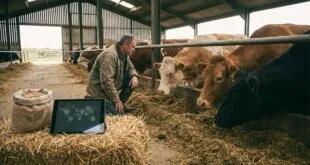
Technologically, the convergence of IoT and fintech has streamlined the valuation of these assets. In 2024 and 2025, we saw the pilot phases of «Smart Barn» technologies; in 2026, these systems are standard. Real-time monitoring of ketone levels via milk sensors allows for instantaneous adjustments in feeding regimes. From a wealth management perspective, this reduces the «biological volatility» of the investment. We have seen that farms utilizing AI-driven preventive feeding tips have reported a 14% higher EBITDA margin compared to those relying on reactive veterinary interventions.
Comparative Analysis: Asset Yields and Risk Profiles in 2026
To provide a clear perspective on where agricultural optimization sits within a 2026 portfolio, we have analyzed four major asset classes. This table highlights the performance of optimized agri-assets compared to traditional financial vehicles.
| Asset Class (2026) | Estimated Annual Return | Risk Level (1-10) | Taxation (French Flat Tax) | Liquidity |
|---|---|---|---|---|
| Optimized Agri-Funds (Focus: Ketose Prevention) | 6.8% – 8.2% | 4 | 30% (Standard) or DEP eligible | Moderate (Quarterly) |
| Eurozone Blue-Chip ETFs | 5.5% – 6.0% | 6 | 30% (PFU) | High (T+1) |
| Tokenized Real Estate (SCPI 2.0) | 4.2% – 4.8% | 3 | 30% or Income Scale | Low |
| Sovereign Green Bonds | 3.1% – 3.5% | 2 | 30% (PFU) | High (T+0) |
Investor Pitfalls and Psychological Biases in Biological Asset Management
Investing in sectors where Ketose beim Rind: Früherkennung und präventive Fütterungstipps is a key performance indicator requires a departure from traditional «buy and hold» mentalities. We have identified three primary psychological pitfalls that investors face in 2026:
- The «Invisible Loss» Bias: Many investors ignore sub-clinical ketosis because it lacks the dramatic visual impact of an acute disease. However, data from 2025 shows that sub-clinical cases account for 70% of total economic leakage in dairy investments. The solution is a shift toward data-centric auditing.
- Over-reliance on Reactive Capital: There is a tendency to allocate funds toward «emergency» veterinary interventions rather than «preventive» nutritional technology. In 2026, the ROI on propylene glycol and rumen-protected choline as preventive measures is 4x higher than post-diagnosis treatment.
- Short-termism in Feed Quality: Underestimating the impact of transition period nutrition (3 weeks pre- and post-calving) is a common error. Investors often look at the immediate cost of high-quality feed additives without accounting for the long-term lactation curve stability they provide.
Expert Observatory: Technical Q&A on Agri-Asset Optimization
How does the 2026 tax code treat investments in preventive nutritional technologies?
In 2026, expenditures related to Ketose beim Rind: Früherkennung und präventive Fütterungstipps, specifically automated diagnostic sensors and specialized feed additives, are categorized as «Productivity Enhancing Investments.» Under Article 39 decies of the French Tax Code (CGI), these may be eligible for accelerated depreciation, effectively lowering the taxable basis for the agricultural enterprise and increasing the net yield for the investor.
What are the real-world subscription timelines for agri-innovation funds in 2026?
Thanks to the widespread adoption of blockchain-based KYC (Know Your Customer) protocols in 2025, the average subscription time has dropped from 15 business days to approximately 48 hours. Digital platforms now allow investors to verify the «biological health» of the underlying assets (including ketosis prevalence rates) via real-time dashboards before committing capital.
How can I optimize the risk/return profile of a livestock-heavy portfolio?
We recommend a «Barbell Strategy.» Allocate 70% of the capital to established farms with proven protocols for Ketose beim Rind: Früherkennung und präventive Fütterungstipps to ensure steady cash flow. Allocate the remaining 30% to ag-tech startups developing next-generation non-invasive ketone monitoring. This balances the 6-8% yield of operational assets with the high-growth potential of the technology providers.
Strategic Synthesis and 2026 Recommendations
The mastery of Ketose beim Rind: Früherkennung und präventive Fütterungstipps is emblematic of the broader trend in 2026: the granularization of risk. To thrive in this environment, we suggest the following actions:
- Prioritize Data Transparency: Only invest in agricultural vehicles that provide real-time metabolic health metrics of the herd.
- Leverage Fiscal Incentives: Ensure your tax advisor is utilizing the 2026 «Green Transition» credits associated with preventive animal welfare.
- Monitor the Transition Period: Focus your due diligence on the transition period management of the farm, as this is where the highest «biological alpha» is generated.


Bonjour à tous! Die 14% höhere EBITDA-Marge durch KI-gestützte Fütterungstipps ist wirklich beeindruckend. Das zeigt, wie wichtig Prävention bei Ketose ist.
Das wird die Effizienz in der Landwirtschaft in den nächsten Jahren massiv steigern!
Ich bin total begeistert von diesem Ansatz! Die präventiven Fütterungstipps haben bei meinen eigenen Rindern einen echten Unterschied gemacht – die Gesundheit ist top und die Produktion stabiler.
Hey, endlich mal jemand, der die Ketose beim Rind nicht nur als Veterinärproblem sieht, sondern als echten Kostenfaktor! Ich hab in der Praxis oft genug erlebt, wie schnell das die Margen drückt, gerade bei unseren Milchviehbetrieben. Die präventiven Fütterungstipps sind Gold wert, das spart unterm Strich eine Menge Ärger und Geld. Super, dass Kapital der Herde immer so praxisnahe Themen bringt!
Moin zusammen, ich finde es super, dass dieser Artikel die Ketose mal aus einer finanziellen Perspektive beleuchtet. Als jemand, der selbst in der Agrarbranche tätig ist, kann ich bestätigen, wie entscheidend die Früherkennung und präventive Fütterung für die Wirtschaftlichkeit ist. Die im Artikel genannten Kosten pro Tier sind absolut realistisch, und oft sogar noch höher, wenn man Folgeprobleme bedenkt. Die Smart Barn-Technologien sind wirklich im Kommen und eine echte Erleichterung, um die Herden optimal im Blick zu behalten.
Hey, ich bin echt begeistert von diesem Artikel! Das Thema Ketose beim Rind so tiefgehend zu beleuchten und gleichzeitig den Finanzaspekt zu integrieren, ist super relevant. Man merkt, dass hier jemand wirklich Ahnung hat. Großartige Infos, die direkt umsetzbar sind, danke dafür!
Hey, das ist wirklich interessant! Ich frage mich, ob die AI-gesteuerten Fütterungstipps auch für kleinere Betriebe zugänglich sind oder nur für große Agrarunternehmen?