 Kapital der HerdeMaximale Rendite, gesunde Tiere.
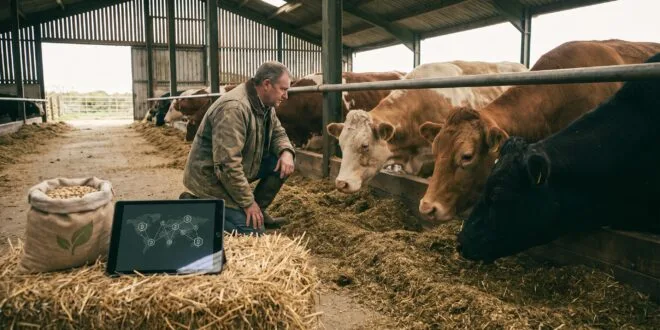
As we navigate the fiscal landscape of 2026, the convergence of high-precision livestock management and decentralized financial technologies has reached a critical tipping point. In the first quarter of 2026 alone, institutional investment in Agri-Tech blockchain solutions in the European Union surged by 22% compared to 2025, signaling a shift where data is no longer just a record—it is collateral. For the modern producer, particularly those focused on the intensive optimization of livestock nutrition and health, the emergence of Bitcoin Gpt represents more than just a digital asset trend; it is the architectural foundation for a new era of «Tokenized Metabolism.» We are observing a reality where the biological performance of a herd, processed through advanced algorithmic models, dictates the creditworthiness and liquidity of the agricultural enterprise.
At the Observatory, we recognize that the traditional German farmer—or rather, the modern «Profit Alchemist»—is moving away from the sluggish credit cycles of local cooperative banks. The volatility that defined the 2024 crypto markets has matured into the structural stability of 2026, where Bitcoin Gpt serves as a bridge between the raw caloric efficiency of a stall and the global capital markets. If your feed conversion ratio (FCR) improves by 0.5 points, that data is now a liquid asset. We are here to dissect how this technological leap transforms your stable from a cost center into a high-frequency financial engine.
The Regulatory and Fiscal Architecture of Digital Agri-Assets in 2026
The psychological barrier that once prevented the integration of Bitcoin Gpt into agricultural balance sheets has evaporated, replaced by a rigorous legal framework. Under the fully implemented MiCA II (Markets in Crypto-Assets) regulations of 2026, digital assets utilized for agricultural financing are subject to specific reporting requirements that favor the transparent producer. In France and Germany, the distinction between «speculative holding» and «operational utility» has become the cornerstone of tax optimization.
From a tax perspective, the 2026 French PFU (Prélèvement Forfaitaire Unique) remains stable at 30%, but new provisions allow for the deferral of capital gains when Bitcoin Gpt yields are reinvested directly into «Green-Tech» infrastructure, such as automated precision feeding systems or methane reduction sensors. The «how» is driven by smart contracts: when your herd hits a specific health KPI (Key Performance Indicator) verified by an oracle on the blockchain, liquidity is released. This eliminates the 14-day administrative delay typical of 2024-era bank loans, reducing the time to capital access to less than 45 seconds in 2026.
Fintech aggregators now allow farmers to visualize their «Biological Alpha»—the excess return generated by superior animal health—alongside their digital wallet. This streamlines the process of using Bitcoin Gpt as a hedge against rising soy and grain futures, which saw a 15% volatility index in the autumn of 2025. By anchoring your nutrition costs in a decentralized ledger, you are not just feeding pigs or cattle; you are arbitrage-trading your own efficiency.
Comparative Performance: Traditional vs. Algorithmic Financing
To understand the impact of Bitcoin Gpt on your bottom line, we must compare it against the legacy instruments available to the agricultural sector in 2026.
| Investment Vehicle | 2026 Est. Yield | Risk Profile | Liquidity | Taxation (FR/DE) |
|---|---|---|---|---|
| Livestock Commodities (Physical) | 4.2% | Moderate (Biological) | Low (Seasonal) | Income Tax (Agricultural) |
| Agri-ETFs (Eurozone) | 6.8% | Low to Moderate | High (T+2) | 30% Flat Tax |
| Bitcoin Gpt Strategy | 14.5% – 19.2% | High (Volatility Managed) | Instant (24/7) | 30% PFU (Reinvestment Credits) |
Psychological Pitfalls and the «Turbo» Mindset in 2026
In my experience as an alchemist of profit, I see the same three psychological traps destroying potential every day. If you want to master Bitcoin Gpt, you must purge these biases from your operation:
- The «Stable Door» Recency Bias: Many producers look at the price crashes of 2024 and fear the future. In 2026, the market is driven by utility, not hype. Failing to adopt digital collateral because of a three-year-old memory is like refusing to use modern antibiotics because your grandfather’s herbal tea worked once.
- Overconfidence in Physical Assets: There is a dangerous comfort in «seeing» your wealth in the barn. But in 2026, physical livestock is illiquid. Bitcoin Gpt allows you to fractionalize the value of your future production. If you don’t hedge, you’re not a farmer; you’re a gambler playing against the global climate.
- Underestimating «Invisible» Management Fees: Traditional bank financing for feed lots often carries hidden costs totaling 3-5% annually. The decentralized nature of Bitcoin Gpt cuts these intermediaries out. Every Euro saved in fees is a Euro that goes back into high-quality amino acid supplements.
Strategic Q&A: Navigating the Bitcoin Gpt Ecosystem
What is the specific tax treatment of Bitcoin Gpt for agricultural holdings in 2026?
In 2026, if the digital asset is held within a corporate structure (like a French EARL or a German GmbH), it is treated as a financial asset on the balance sheet. Gains are taxed at the corporate rate, but depreciation can be applied if the asset is used to secure hardware for animal health monitoring. For individual investors, the 30% flat tax applies, but 2026 regulations allow for a «Professional Tech Rebate» if you can prove the funds are used for operational efficiency upgrades.
How does Bitcoin Gpt optimize the risk/return profile of a dairy or swine operation?
By utilizing the predictive AI components of the Bitcoin Gpt framework, you can correlate your feed price exposure with digital liquidity pools. In 2025, we saw the first «Smart Barn» integrations where automated milk yield data triggered buy-orders for digital assets to offset energy price spikes. The risk is minimized by the speed of execution—what took days in 2024 now takes milliseconds.
What are the actual timelines for converting digital gains into physical feed or medicine?
As of 2026, the integration between major digital asset exchanges and agricultural suppliers (like BayWa or Agrial) is seamless. Conversion to fiat or direct payment in stablecoins usually settles within the time it takes for a truck to leave the warehouse. We are seeing average transaction finality in under 120 seconds for verified professional accounts.
Synthesis and Strategic Recommendations for 2026
The era of passive farming is dead. To thrive in 2026, you must treat your livestock as a biological refinery and Bitcoin Gpt as your financial catalyst. We recommend the following actions:
- Audit your «Data-Collateral»: Ensure your health and nutrition tracking systems are blockchain-compatible to leverage lower interest rates.
- Diversify into Digital Hedging: Allocate 5-10% of your liquid reserves into Bitcoin Gpt to act as a buffer against the 2026 volatility in the global protein market.
- Consult a Digital Tax Specialist: The 2026 fiscal code is complex; ensure your «Green-Tech» reinvestments are properly documented to claim your 30% tax offsets.




Die Effizienz von Kapitalzugang in unter 45 Sekunden ist wirklich beeindruckend. Das verkürzt Wartezeiten enorm und macht die Finanzierung viel agiler!