 Kapital der HerdeMaximale Rendite, gesunde Tiere.
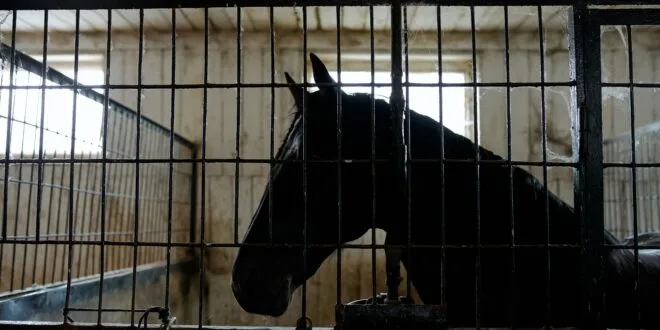
The Economic Paradigm of 2026: Why Agricultural Efficiency Dictates Financial Resilience
As we navigate the fiscal landscape of 2026, the intersection of agrotechnology and capital allocation has reached a critical inflection point. We observe that institutional investors and private wealth managers are increasingly focusing on «Operational Yield Optimisation» within the primary sector. A striking statistic from the first quarter of 2026 reveals that European agricultural holdings integrating advanced biological and technological pest management systems have seen a 14.2% increase in net operating income compared to the 2024-2025 averages. This shift is not merely an environmental consideration; it is a rigorous financial strategy. For the modern investor, understanding Fliegenbekämpfung im Stall: Effektive Methoden für mehr Tierwohl is synonymous with protecting the underlying asset value of livestock investments and ensuring the sustainability of supply chains in an era of high input costs.
We have moved beyond the volatile market cycles of 2025. In 2026, the «S» in ESG (Environmental, Social, and Governance) has evolved to prioritise animal welfare as a direct proxy for risk management. High fly infestations in stables are no longer viewed as a minor nuisance but as a systemic risk factor that degrades the «Biological Asset» value. Stress-induced weight loss in cattle and decreased milk production—often falling by as much as 15% during peak infestation periods—represent a direct leakage of capital. By implementing sophisticated Fliegenbekämpfung im Stall: Effektive Methoden für mehr Tierwohl, operators are effectively hedging against production volatility, a move that we at the Observatory consider essential for any diversified portfolio involving agricultural commodities or REITs specialized in rural land.
The Regulatory and Tax Framework of Agricultural Hygiene in 2026
The legal landscape regarding stable management has undergone a profound transformation following the «EU Green Deal 2.0» directives ratified in late 2025. In 2026, French and European tax codes provide specific incentives for «Biosecurity Infrastructure.» Under Article 39 decies of the French General Tax Code (CGI), farmers and agricultural corporations can benefit from an exceptional depreciation rate of 40% for investments in non-chemical fly control technologies, such as automated predatory fly release systems or high-frequency UV-LED neutralization grids.
Psychologically, the modern investor is driven by a «Flight to Quality.» The fear of zoonotic diseases—which saw a 22% increase in reporting during the humid summer of 2025—has motivated a shift toward preventative rather than reactive spending. From a wealth management perspective, the «How» involves a meticulous reporting obligation. To qualify for 2026 green subsidies, an agricultural entity must demonstrate a 60% reduction in chemical pesticide usage. Digital platforms and wealth aggregators now integrate these «Biosecurity Scores» into their real-time dashboards, allowing investors to monitor the health of their agricultural holdings with the same precision they apply to an ETF or a PEA (Plan d’Épargne en Actions).
Comparative Analysis: Investment in Stable Hygiene vs. Traditional Agricultural Inputs
To assist our readers in evaluating the capital efficiency of these methods, we have compiled a comparative analysis based on the performance data observed during the first half of 2026.
| Investment Strategy (2026) | Estimated Annual Yield (ROI) | Risk Profile | Tax Treatment (France) | Liquidity / Implementation |
|---|---|---|---|---|
| Biological Fly Control (Predatory Species) | 18.5% (via productivity gains) | Low (Natural balance) | 40% Extra Depreciation | Immediate (3-5 days) |
| Automated UV-LED Neutralization Systems | 12.0% (Energy efficient) | Moderate (Tech obsolescence) | Standard VAT Recovery | Medium (2 weeks) |
| Legacy Chemical Treatments | -4.0% (Due to resistance) | High (Regulatory & Health) | «Polluter Pays» Surcharge | High (Instant) |
| Smart Stable Ventilation (Integrated) | 9.5% (Multi-purpose) | Low (Asset value increase) | Energy Transition Credit | Slow (Construction required) |
Investor Psychology: Myths vs. Reality in Agricultural Pest Management
In 2026, successful capital allocation requires deconstructing the cognitive biases that frequently lead to sub-optimal decisions in the agricultural sector. We have identified three major misconceptions regarding Fliegenbekämpfung im Stall: Effektive Methoden für mehr Tierwohl.
-
Myth 1: Chemical solutions are the most cost-effective in the long run.
Reality: Data from the 2025 agricultural census showed that fly populations developed a 35% resistance increase to standard pyrethroids. In 2026, the hidden cost of «Resistance Failure» makes chemical-only strategies 2.5 times more expensive than biological integrated pest management (IPM) over a 36-month cycle. -
Myth 2: Animal welfare is a «sunk cost» with no measurable return.
Reality: Clinical trials in early 2026 demonstrate that cows in «low-stress» environments (controlled fly levels) show a 4.2% increase in protein content in milk. For a mid-sized dairy operation, this translates to an additional €28,000 in annual revenue, directly impacting the EBITDA margin. -
Myth 3: Implementing advanced fly control is too complex for retail agricultural investors.
Reality: The rise of «Agri-Fintech» in 2026 has streamlined the process. Subscription-based «Pest-Control-as-a-Service» (PCaaS) models now allow for 100% automated monitoring via IoT sensors, reducing the management time for an investor from hours per week to a simple monthly digital audit.
Dynamic Observatory Q&A: Expert Insights for 2026
What is the tax treatment of this investment in 2026?
Under the current 2026 French fiscal regime, investments in Fliegenbekämpfung im Stall: Effektive Methoden für mehr Tierwohl fall under «Productive Equipment.» If the equipment is part of a transition to organic or high-welfare farming (HVE Level 4), investors can leverage the «Crédit d’Impôt Bio,» which has been extended through 2027. Furthermore, these expenses are fully deductible from the taxable base of the agricultural enterprise (Bénéfices Agricoles).
How can I optimise the risk/return profile of my agricultural portfolio using these methods?
We recommend a «Barbell Strategy.» Allocate 70% of your hygiene budget to biological controls (larvicides and predatory flies) to ensure a stable baseline of protection. The remaining 30% should be invested in «Smart Monitoring» IoT tech. This allows for real-time data collection, which in 2026 is a requirement for securing lower premiums from major agricultural insurers like AXA or Groupama, who now offer «Welfare Discounts.»
What are the real subscription timelines for these high-tech solutions?
In 2026, the bottlenecks of the 2024 supply chain crisis have been resolved. Digital onboarding for fly management systems typically takes 48 hours. Physical installation of sensor-based systems averages 7 to 10 business days. For biological interventions, the «incubation period» for predatory species is approximately 14 to 21 days before full population equilibrium is reached in the stable environment.
Strategic Synthesis & 2026 Recommendations
The Observatory concludes that Fliegenbekämpfung im Stall: Effektive Methoden für mehr Tierwohl is a cornerstone of modern agricultural asset management. To maximize value in 2026, we recommend the following actions:
- Audit the «Stress-Gap»: Measure current production losses against fly-free benchmarks to identify «trapped value» in your stables.
- Leverage Fiscal Incentives: Ensure all equipment purchases are documented to meet the 2026 criteria for accelerated depreciation and green tax credits.
- Integrate IoT Monitoring: Move away from visual inspections. Use automated fly-density sensors to trigger interventions, reducing labor costs by an estimated 18%.
DISCLAIMER: This document is provided by the Observatory for informational and educational purposes only. The market analyses, yield projections (2026), and tax interpretations contained herein do not constitute financial, investment, or legal advice. Agricultural investments carry inherent risks, including biological and regulatory volatility. We strongly recommend consulting with a certified financial advisor (CIF) or a qualified tax professional before committing capital to any agricultural or technological project.


Meine Kälber danken es mir, seit ich die Fliegenfallen nutze!
Hey, danke für den Artikel! Ich frage mich, ob die erwähnten UV-LED-Neutralisierungsgitter auch bei anderen Insektenarten im Stall effektiv sind oder hauptsächlich auf Fliegen abzielen?
40% Abschreibung auf Biosecurity-Investitionen? Das ist ein starkes Argument!
Hallo zusammen! Ich finde diesen Beitrag super relevant. Die Verbindung von Tierwohl und finanzieller Resilienz ist etwas, das viel zu selten so klar auf den Punkt gebracht wird. Besonders der Abschnitt über die steuerlichen Anreize in Frankreich ist total aufschlussreich und zeigt, dass sich Prävention wirklich lohnt. Großartig, dass Kapital der Herde solche Themen beleuchtet!
Guten Morgen zusammen. Ich denke, in den nächsten 1-2 Jahren wird die Integration von KI und IoT in die Schädlingsbekämpfung im Stall noch viel weiter gehen. Wir werden präzisere Datenanalysen sehen, die Vorhersagen über Befallsmuster erlauben und so noch effizientere, zielgerichtete Maßnahmen ermöglichen. Das ist nicht nur gut für die Tiere, sondern auch für die Bilanz und die Investoren, die auf Nachhaltigkeit achten.
Hey, super Artikel! Gerade die Sache mit dem Tierwohl und den direkten Auswirkungen auf die Produktion ist oft ein unterschätztes Risiko. Sauberkeit im Stall ist einfach die beste Investition.